
about us
founded in 2017 after almost 20 years experience developing and designing best in class ion exchange processes for nitrate and hexavalent chromium removal
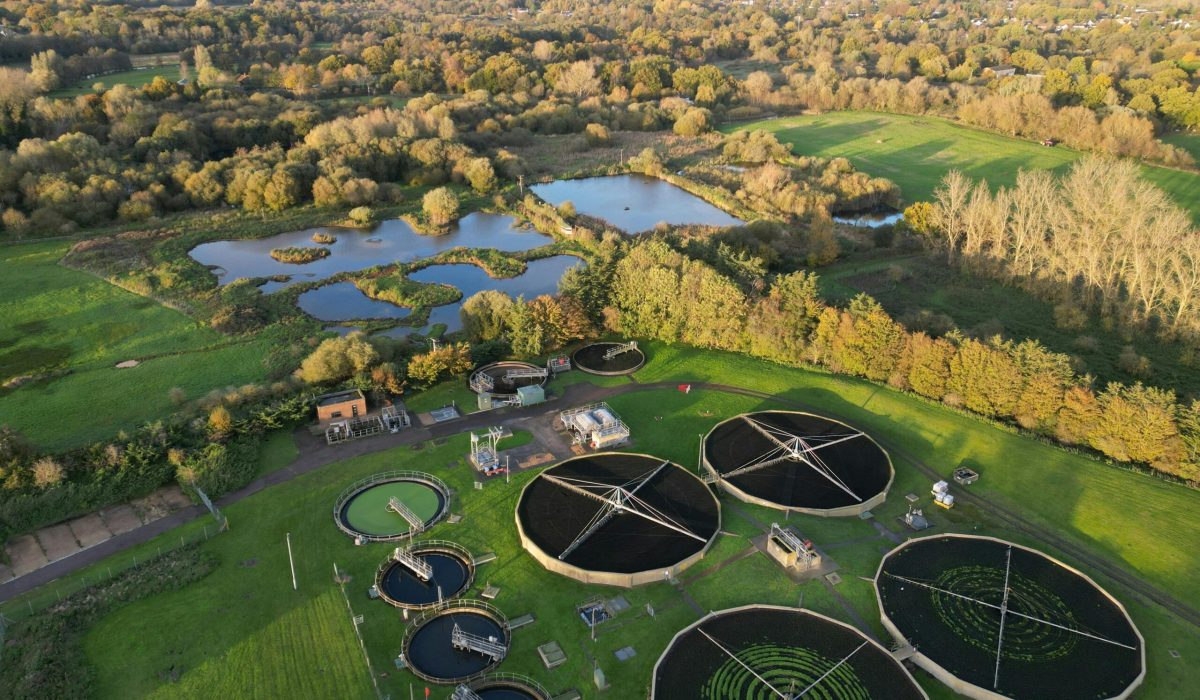
Agua DB realised that current ion exchange processes used in the water industry were neither affordable nor sustainable. This had lead to a dysfunctional supply chain, with insufficient business to support a dedicated equipment supplier. The technology needed to change from a linear process, producing a waste, to a circular one, recovering nutrients and other valuable materials for re-use.
Over the years leading up to the formation of Agua DB, we’d realised that the actual behaviour of ion exchange resins in the real world didn’t quite fit what the traditional theories of how ion exchange resins worked. We started asking questions: why do does nitrate peaking occur and how was the resin production process changed to make nitrate selective resins, which overcame this problem? Slowly, we realised that the traditional theory of how a resin was regenerated was not quite the whole story.
We explored what was happening in more detail with Agua DB and realised that it was possible to regenerate more than half of the functional sites on the resin very easily, with the remainder requiring a massive excess of salt to regenerate them. By simply using just enough salt to regenerate these easily regenerated sites, we achieved regeneration efficiencies approaching 100% – a game changing improvement from conventional regeneration which was <10% efficient. We’ve called this new regeneration process NTPlus.
This meant we could regenerate using potassium chloride, rather than sodium chloride (salt). That’s significant as potassium chloride is potash – the cheapest form of potassium nutrient used by farmers throughout the world. Farmers spread potash out of season – the potassium binds to the clays in the soils so it’s available to crops and rainfall washes the chloride away as it’s toxic to crops.
By using potash in NTPlus, we could remove nutrients from groundwater and in doing so convert potash into better nutrients, rather than producing a waste.
Yes, sure, we’ve talked about nitrate removal and a lot of people will have heard about the Nitrate Timebomb. Yes, we can turn the nitrate timebomb into a sustainable solution, but there’s much more than that going on – and NTPlus is potentially an Industrial Ecology solution to a range of problems. Let’s talk about sulphate, because half of the potassium chloride we use becomes potassium sulphate – or sulphate of potash, if you’re a farmer.
Sulphate of potash is important if you’re a farmer – compared to potassium (K) added as potash, it improves the crops turgor. For non-farmers, that’s the crop’s resistance to drought, stress, disease and pests – all the things that will increase with climate change. Significant yield increases have been identified across a range of crops using sulphate of potash.
Currently 95% of K fertiliser in use is potash. To convert it into sulphate of potash (there’s only a tiny bit around naturally) produces twice as much GHG as the Haber Bosch process and uses sulphuric acid. There’s a big problem with sulphuric acid: it’s the biggest bulk chemical production in the world, with most coming from desulphurising fossil fuels.
Most is already used to produce (mainly phosphate) fertilisers, but demand is increasing from Greentech as it’s used to extract the speciality metals used to make batteries, electric motors and solar panels. With mid-level transitioning away from fossil fuel use, there’s an estimated shortfall of 140% of todays production levels by 2040.
There’s actually even more to sulphate than this… Farmers used to get enough sulphate (it’s the fourth major nutrient for crops) from acid rain, but then desulphurisation plant became standard and farmers had to add sulphate to the crops. Since we started burning fossil fuels, sulphate levels have steadily increased in freshwater rivers and lakes and this increase continued as run off from fields replaced acid rain. Now sulphate levels in freshwater systems have been linked with redissolving phosphates which have sat in sediments for decades and are a significant contributing factor in eutrophication events. NTPlus recovers most of the sulphate from groundwater at 1/24th of the carbon cost of producing it synthetically, in fact it’s the only way of making sulphate of potash in a sustainable way.
So, yes, sulphate is important, but it’s not the end of the story… We’ve mentioned phosphates. You don’t get much in groundwaters, but there’s plenty in waste water. In fact, if we were to recover most of the phosphate going into waste water treatment plant, the UK would become self sufficient in phosphate fertiliser – rather than 100% reliant on imports. Currently, the water sector spends £480 million each year to remove £48 million of phosphate fertiliser by precipitating it out with iron in a form that is useless to agriculture. By refining the NTPlus process, we can recover this phosphate in a form ideal for re-use by agriculture.
Let’s focus now a little more on agriculture. We need to grow more food to feed an expanding global population. Irrigation is becoming increasingly important to provide resilience to climate change. 20% of arable land has irrigation and produces 40% of global crops. Land with irrigation will expand to almost double the current area. However, only 5% of installed irrigation is optimised. Agriculture already uses 72% (UN) of abstracted water, roughly half in irrigation, so there have to be drivers to improve irrigation efficiency. NTPlus produces liquid nutrients, ideal for re-use in smart irrigation using variable rate application. Variable rate application is key to reducing nutrient use – think of crops as a person: if you were expected to eat all the food you needed for the year in two meals, vs eating two meals a day, what do you think would be the better option? Variable rate can reduce nutrient additions like nitrate by 50% or more. NTPlus also produces high quality irrigation water, which overcomes many of the maintenance issues associated with advanced irrigation systems.
So let’s sum up the benefits of NTPlus:
Produces clean, safe, wholesome drinking water – it even removes PFAS!
Produces low chloride, low carbon liquid nutrients which are good for crops
Doesn’t produce any waste
Is a very simple plant, closer to a smart irrigation system than some of the ion exchange plants in use today!
Applied at waste water treatment works can recover phosphates (DEFRA funded Innovate UK project NTPlus2 taking to demonstration scale with partners Varicon Aqua, Plasma Fresh, the Royal Agricultural University and UK AgriTech Centre, with demonstrations at Thames Water and Anglian Water)
Enables final effluent compliance with the revised EU UWWTD 2025
Recovers nutrients at beneficial costs to farmers to encourage adoption – it’s better than paying ten times the price to remove them!
The only process that recovers significant quantities of sulphate, which will help restore fresh water ecosystems
let's bring the circular economy
to agriculture with NTPlus
NTPlus uniquely recovers nutrients from wastewater and nitrate
removal plants in liquid form, compatible with smart
irrigation and greenhouse growing.
let's bring the circular economy to agriculture with NTPlus
NTPlus uniquely recovers nutrients from wastewater and nitrate removal plants in liquid form, compatible with smart irrigation and greenhouse growing.